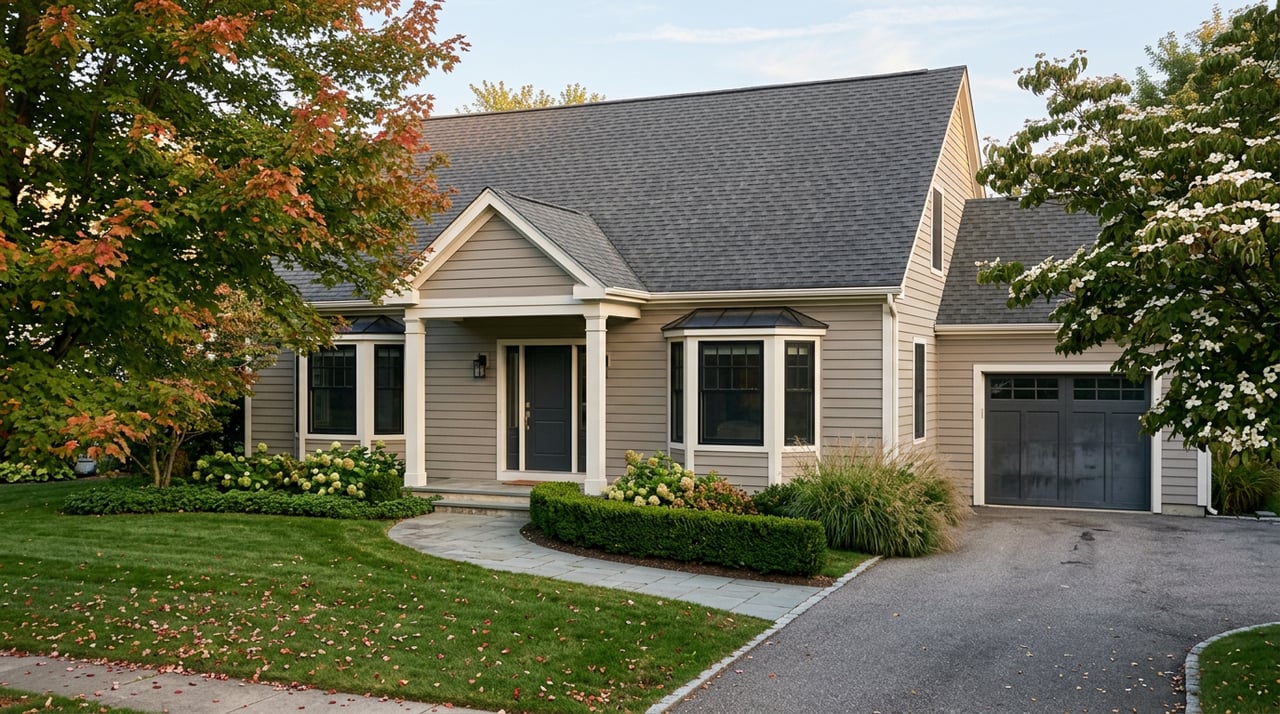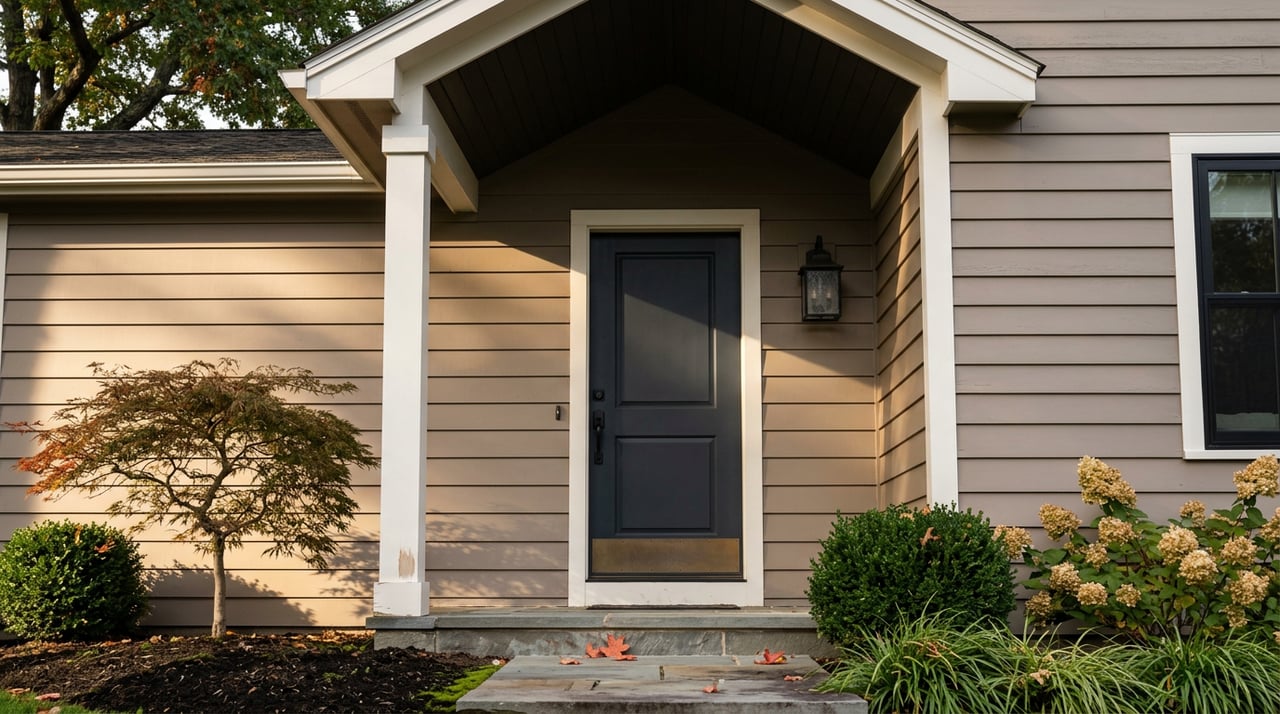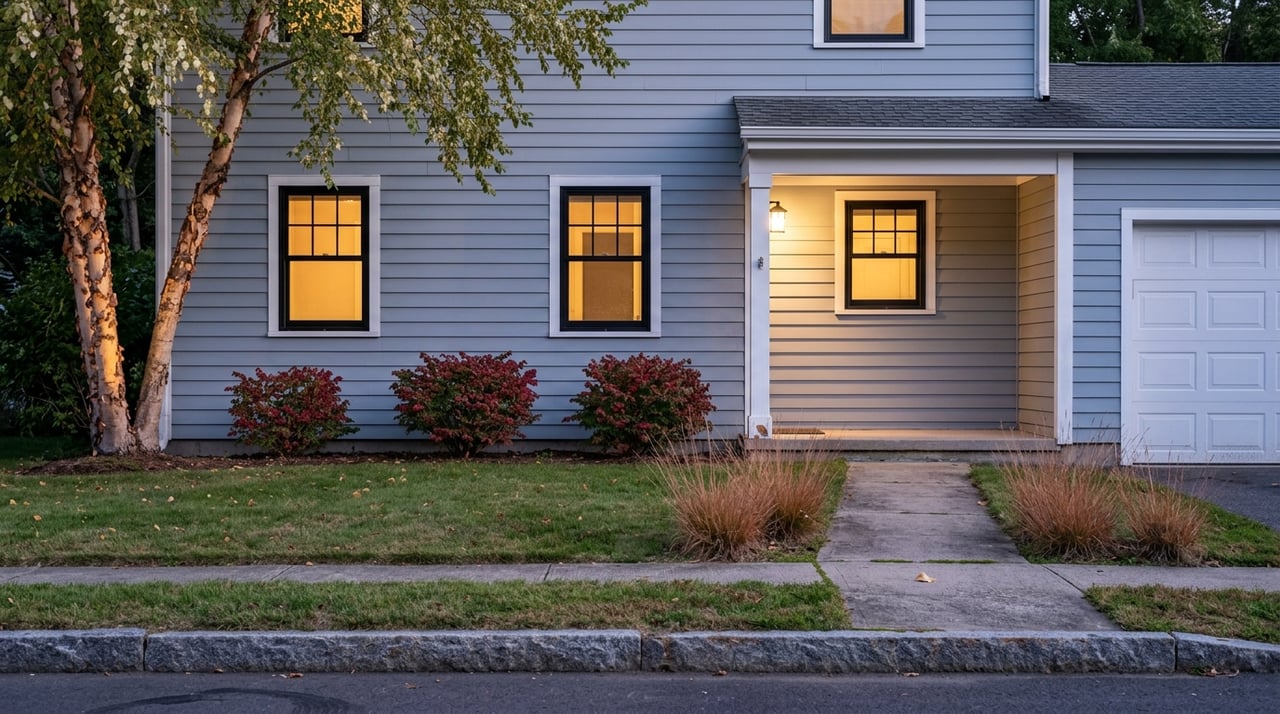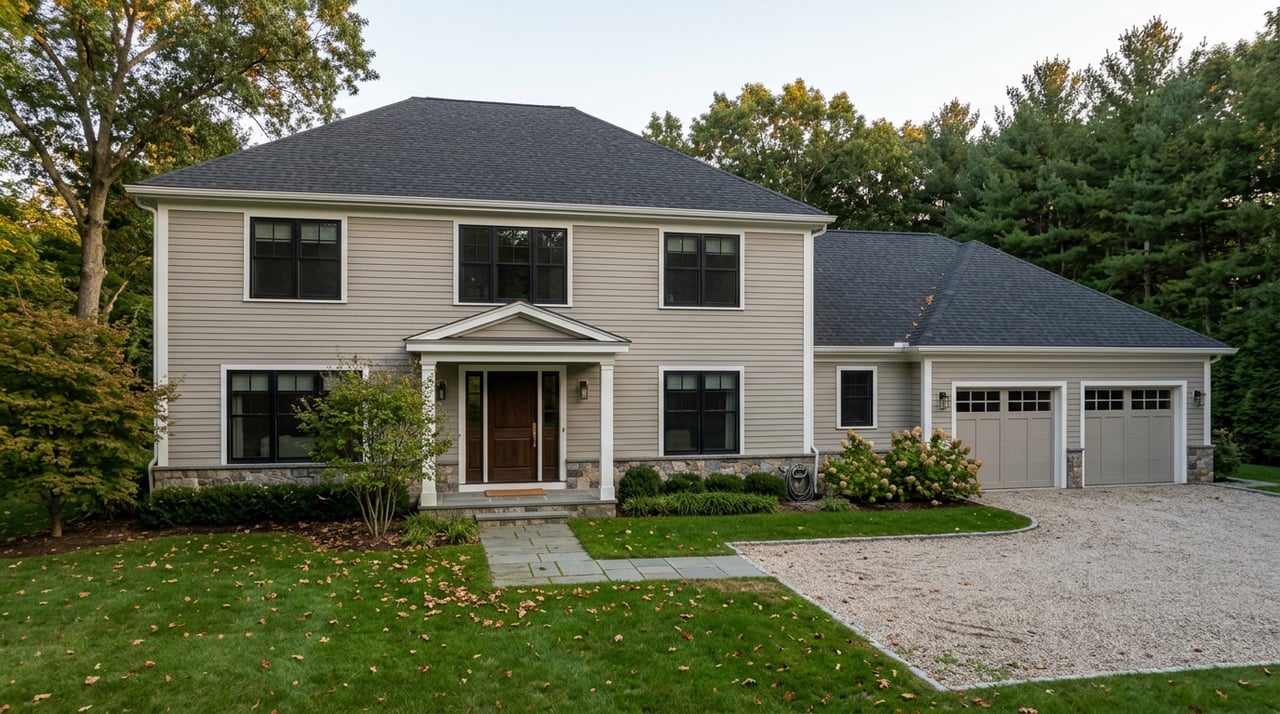
Two houses came on the market in Bolton this year within a few miles of each other. One sits on a little over two acres, a well-kept 1999 Colonial with hardwood floors and a winding country-road setting, priced the way an older Bolton home usually prices. The other is a proposed cluster of eight detached homes on 4.7 acres off South Bolton Road, a partly age-restricted project called Mallard Lane that's currently working through the town's Board of Appeals. Pull the median price for Bolton and you get one number. Look at what's actually for sale and you're looking at two different housing markets that happen to share a zip code.
That split isn't random. It's written into Bolton's zoning bylaw, and once you see it, the town's confusing price data stops looking like noise and starts looking like a pattern worth understanding before you write an offer.
Why One Median Can't Describe Bolton
Bolton's zoning requires a minimum lot size of 80,000 square feet, just under 1.8 acres, for a standard residential lot. That's the baseline. Step outside it and the numbers jump fast: a Backland lot, which trades reduced road frontage for more land, needs 4.5 acres. The town's own Farmland and Open Space Planned Residential Development bylaw goes the other direction, letting a developer drop to roughly one acre per lot if they set aside a third of the total parcel as protected open space or farmland.
None of this happens in isolation from infrastructure. Bolton has no municipal water or sewer service for residential properties. Every home relies on a private well and a septic system, which is part of why the town's 2021 Housing Production Plan and its 2024 Master Plan update both point to large-lot zoning as the reason Bolton has stayed low-density and car-dependent, with Route 117 as the town's single primary artery and the road that backs up during peak commuting hours.
Put those two facts together and you get a town that physically cannot build the kind of compact, moderately priced subdivision that keeps a median price anchored in the middle. Bolton either builds on the legal minimum lot, which still requires enough land to support a well and a septic field, or it builds bigger. There's very little room in between.
The Two Bolton Markets, Side by Side
This is where the pricing data that circulates online stops making sense until you separate it by lot type. In January 2026, the median sold price in Bolton was $660,000, down 6 percent year over year, with homes taking a median of 40 days to sell compared to 23 days the year before. That's the standard-lot side of town: older homes on lots close to the 1.8-acre minimum, the housing stock that's been there for decades.
Meanwhile, Zillow's home value index for Bolton, updated at the end of July 2026, put the average home value at $885,722, up 0.9 percent over the year. By June 2026, the median list price tracked by Movoto had climbed to $1.01 million, and in April 2026 it had touched $1.17 million. That's the Backland and FOSPRD side: new construction and larger estate parcels, where the land itself costs more before a foundation is even poured.
| Standard-lot Bolton | Backland / FOSPRD Bolton | |
|---|---|---|
| Minimum lot size | ~1.8 acres (80,000 sq ft) | 4.5+ acres (Backland) or ~1 acre with open space set-aside (FOSPRD) |
| Typical inventory | Older Colonials, 1970s-2000s builds | New construction, estate-scale homes |
| Recent median | $660,000 sold, Jan 2026 | $1.01M-$1.17M list, Apr-June 2026 |
| Price per square foot | $260, down 4.9% year over year | $310-$328, tracked separately by lot size |
| Days on market | 40, Jan 2026 | 33, June 2026 |
The gap between a $660,000 median sold price and a $1.17 million median list price isn't a market correcting itself month to month. It's two different products getting folded into a single town-level statistic. If you're comparing Bolton to a neighboring town on price alone, you're very likely comparing your target neighbor to only one half of Bolton, usually without knowing it.
The Developments That Built Each Side
You can see this pattern in the specific neighborhoods that have gone up over the past two decades, each one shaped by which zoning path the developer chose.
Century Mill Estates, off Mill Pond Road near Spectacle Hill Road, is a 78-lot subdivision permitted in 2007, before Bolton had adopted its current inclusionary housing bylaw. The developer negotiated to donate fees in lieu of building affordable units on site, contributing $133,056 to the town's Affordable Housing Trust Fund. It's a large, standard-zoning neighborhood, and it's part of why that side of town still trades closer to the $660,000 to $900,000 range.
Craftsman Village at Brigham Farm, off Sugar Road across from Colonial Candies, took a different approach: 30 bungalow-style single-family homes built within a condominium structure, a smaller-footprint option that doesn't fit neatly into either the standard-lot or estate-lot bucket but shows the town has room for a third path when a developer structures ownership differently.
Mallard Lane, the project still working through approvals, is proposing 8 detached single-family homes on 4.7 acres off South Bolton Road, partly age-restricted. It's a live example of the Backland pattern in progress right now: fewer homes, more land per home, and a price point that will almost certainly land well above the town's standard-lot median once it's built out.
What This Means If You're Pricing a Move to Bolton
If you're comparing Bolton to Hudson, Berlin, or Lancaster on the strength of a single median number, you're missing the variable that matters most: which Bolton are you actually shopping in. A buyer looking at a 2 to 2.5-acre Colonial on a winding country road is playing in a different price band, with different carrying costs, than a buyer looking at a new-construction home on a Backland parcel with a fresh septic design built for the house.
That septic detail matters more in Bolton than in towns with municipal sewer. A property currently on the market with an approved seven-bedroom septic permit on a 4.13-acre homesite is signaling something specific: the land can support significant square footage, and that capacity is priced in before construction even starts. On the standard-lot side, an older home's well and septic age and capacity become a real point of negotiation, not a formality.
The days-on-market split tells a similar story. Homes moving in 33 days, the pace tracked in June 2026, tend to be the newer, larger product that's in tighter supply. Homes taking 40 days, the January 2026 figure, are more often the standard-lot resale inventory competing against itself.
If you're the kind of buyer who wants land, privacy, and a custom or newer build, you're pricing against the Backland and FOSPRD side of Bolton, and the town's headline median will understate what you'll actually spend. If you want an established neighborhood on a legal-minimum lot, you're pricing against the standard side, and the higher list-price figures you've seen online don't apply to you.
A Couple of Questions Worth Asking Before You Tour
Does this lot meet the standard 1.8-acre minimum, or is it a Backland or FOSPRD lot? Ask your agent to pull the lot classification before you fall in love with the acreage. It changes what comparable sales actually apply.
If this is an older home, when was the septic system last inspected or upgraded? Since Bolton has no municipal sewer, septic condition affects both financing timelines and resale value more directly than in towns with town sewer service.
Bolton rewards buyers who understand its zoning before they start comparing prices to the next town over. If you're trying to figure out which side of that split fits your budget and your plans, Rhodes Realty Advisors can walk through the specific parcels and lot histories with you. Let's Connect.