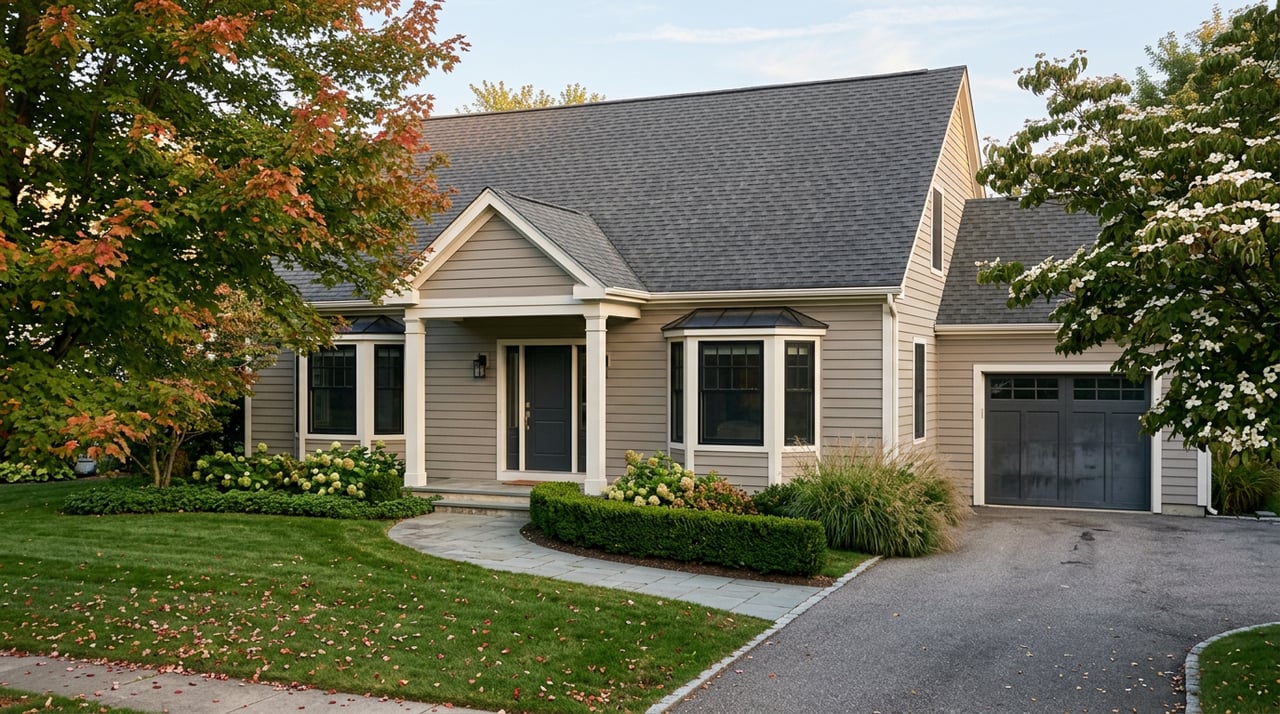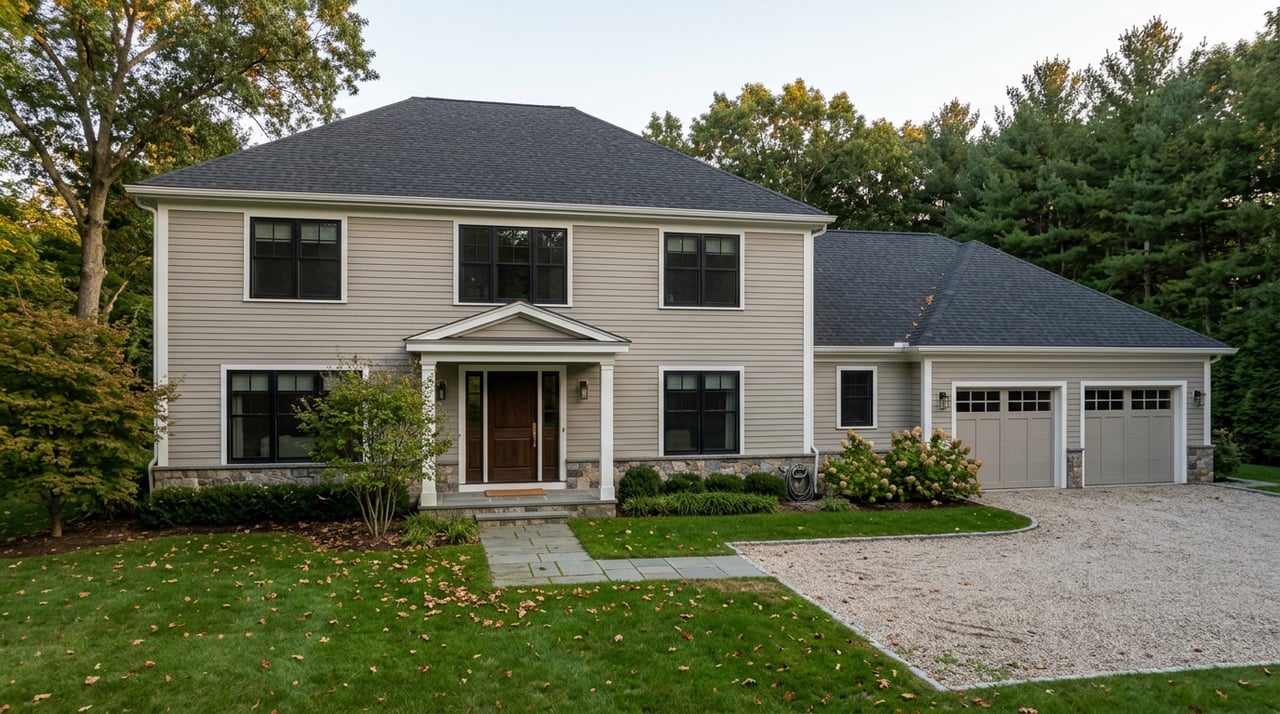
Drive west on Route 9 from downtown Marlborough toward Westborough and the towns blend into each other. Same corridor, same distance to the Pike, same general mix of ranches, colonials, and newer townhouse developments. But look at what a square foot actually costs in each town, and a gap opens up that has nothing to do with curb appeal.
As of the most recent closed-sale data tracked by Redfin, covering March 2026 for Marlborough and the three months ending May 2026 for Westborough, Marlborough homes sold for a median of $294 per square foot while Westborough homes sold for $348. That's a $54 gap, or about 18 percent, on properties that otherwise look a lot alike from the street. The reason isn't schools or lot size. It's a train that stopped running through Marlborough in 1937 and never came back.
What the Numbers Actually Show
It helps to separate the noise from the signal here, because the two most commonly cited numbers tell different stories depending on which one you read.
Median list price, the number most portals show first, jumped around in both towns through the summer of 2026 as different homes cycled onto the market. That figure is a snapshot of whatever happens to be listed on a given day, not what actually sold. Median sale price and price per square foot, drawn from closed transactions, are steadier and more useful for comparing two towns against each other.
By that measure, Marlborough's March 2026 median sale price was $650K, up 5.5 percent from the year before. Westborough's median sale price over the three months ending May 2026 was $729K, up 14.6 percent year over year. That's already a meaningful spread, but it gets more interesting when you control for size. Price per square foot fell by a similar amount in both towns over the same stretch, roughly 8 percent, which tells you the cooling in the broader market hit both places about equally. What didn't equalize is the base price you're cooling from. Even after that shared pullback, Westborough's per-square-foot number sat $54 above Marlborough's.
| Metric | Marlborough | Westborough |
|---|---|---|
| Median sale price | $650K (March 2026) | $729K (3 mo. ending May 2026) |
| Price per square foot | $294 | $348 |
| Days on market | ~21 days | ~19 days |
| Average offers received | 5 | 2 |
| Own MBTA commuter rail stop | No | Yes |
That last row on offers is worth sitting with. Marlborough homes are drawing more competing offers on average than Westborough homes, even though Westborough is appreciating faster. That's not what you'd expect if Marlborough were simply the less desirable option. It reads more like buyers have already noticed the value gap and are competing hard to close it, one house at a time, without the town-level price actually catching up.
The Line That Isn't There
Marlborough is routinely described as the largest city in Central Massachusetts and the unofficial economic hub of the MetroWest region. It has not had passenger rail service since 1937.
The old route ran through what's now the Marlborough Junction site near Maple and Mill streets, using a freight-only line called the Agricultural Branch that CSX still operates today. Reopening it isn't a matter of flipping a switch. Public transportation advocacy group TransitMatters raised the idea in a 2024 report, arguing that roughly 16,000 employed residents live within two miles of the existing Framingham/Worcester Line and could benefit if service were extended into the city. Marlborough city officials, according to reporting from the Worcester Business Journal, weren't convinced it was realistic in the near term. TransitMatters' own regional rail project manager, Jackson Moore-Otto, was candid about how far off the idea sits, describing the Agricultural Branch reactivation as a bit more of a blue-sky concept.
Until that changes, Marlborough has built its own workaround. The Marlborough Economic Development Corporation runs a free commuter shuttle connecting downtown, the Apex Center of New England, and the business park at 200 Forest Street to the Southborough MBTA station, three round trips each weekday morning and evening. It's a real solution for a real problem, and it says something on its own: the city has spent money to build a bus bridge to a train stop in a different town, because the train stop in its own town closed before most current residents were born.
What Westborough Bought With Its Station
Westborough's answer to the same commuter problem came from a different direction entirely. When the MBTA restored Worcester service in the 1990s, it added infill stops at Ashland, Southborough, Westborough, and Grafton in 2000 and 2002. Westborough's station, built off Smith Parkway near Route 9, cost $4.9 million and opened with 311 parking spaces. The town's own transportation page still promotes the stop as a core selling point for residents, alongside a WRTA shuttle that connects the station to local shopping and business districts.
That's not a marginal amenity. It means a Westborough household can walk or drive a few minutes to a platform and be in Boston without the extra leg that a Marlborough commuter has to build into their morning. Appraisers, lenders, and buyers all price that kind of convenience into a home eventually, even ones who never plan to ride the train themselves, because it shapes who else would want the house down the road.
What This Means If You're Choosing Between the Two
If you're comparing Marlborough and Westborough on a spreadsheet, the instinct is to treat the price gap as a simple quality difference and move on. The rail history suggests something more specific: part of that $54-a-square-foot spread is priced access to a fixed piece of infrastructure, not a broader statement about one town over the other.
For a buyer who drives to work regardless of commuter rail, that gap can look like straightforward value. Marlborough offers comparable highway access, a larger inventory of resale and new-construction homes, and a lower entry price per square foot, with a functioning shuttle option to Southborough's station for anyone who does want the train. For a buyer whose daily routine depends on walking to a platform, Westborough's built-in stop removes a step that no amount of Marlborough inventory can currently replace.
Neither position is right or wrong. It's a tradeoff worth naming clearly instead of folding into a vague sense that one town is "better." And it's worth watching from a distance. The TransitMatters proposal has no funding source and no timeline, and Marlborough officials have been skeptical of it in the near term. Nobody should buy a Marlborough home on the assumption that a station is coming. But if the conversation ever moves from advocacy report to funded project, a city that's spent 89 years without passenger rail and has already built its own shuttle infrastructure to compensate would be one of the more interesting places in Central Massachusetts to already own something.
Frequently Asked Questions
Does the Marlborough EDC shuttle count as commuter rail access? It gets you to a train, but it's a bus connection to a station in Southborough rather than a stop inside Marlborough itself. It solves the commute for residents willing to add a shuttle leg to their morning, but it doesn't function as a substitute for the kind of walk-to-the-platform access Westborough residents have.
Could a Marlborough train station actually get built? The 2024 TransitMatters report raised the idea seriously, but reactivating the Agricultural Branch would require significant investment in a line CSX currently uses only for freight, and Marlborough officials have been publicly skeptical it's realistic in the short term. There's no funding source or construction timeline attached to the proposal as of this writing.
Does the price gap show up in condos too, or mainly single-family homes? It's narrower on the condo side. Listing data tracked by Movoto in August 2026 put Marlborough condos at a median of $579K and Westborough condos at $588K, a gap of less than 2 percent, compared to the roughly 18 percent gap in per-square-foot pricing across the whole market. That pattern makes sense if the rail premium is capitalized mainly into established single-family neighborhoods rather than newer condo developments, which tend to price closer to construction cost regardless of which side of the town line they sit on.
If you're weighing Marlborough against Westborough, or trying to figure out what a specific commute pattern is actually worth in either town, that's exactly the kind of local mechanics Rhodes Realty Advisors spends its time tracking. Let's Connect and talk through what the numbers mean for your specific search.